
Car Hauler Buying Guide
Jun 30, 2026Last Updated on July 30, 2026 by Jon Brigham
Last Updated on July 30, 2026 by allprotrailersuperstore
Buying your first car hauler, or upgrading to a better one, should feel exciting. You’re finally hauling that classic car to shows, starting a side business moving vehicles or acquiring reliable transportation for inventory. But the decision can feel overwhelming.
One wrong choice could mean wasted money, safety issues or a trailer that doesn’t fit your needs. This car hauler buying guide cuts through the complexity and gives you a clear path to choosing the right trailer with confidence. No jargon, no guesswork — just the information you need to make a smart, safe investment.
What Is a Car Hauler?
A car hauler is purpose-built with features designed to safely transport cars, trucks or other wheeled vehicles. These features include:
- Low deck height to make loading and unloading easier and safer
- Beavertail design with a gradual incline for smooth loading
- D-rings that provide secure tie-down points for strapping your vehicle
- Specialized ramps designed to handle vehicle weight and width
Can you haul a car on a utility trailer? Technically, yes — but it’s not ideal. Utility trailers lack the low profile and secure tie-down points that make car haulers safer and more practical. If you transport vehicles regularly, whether you’re a car enthusiast moving a weekend project or a dealer shuttling inventory, a dedicated car hauler is the right tool for the job.
Now that you understand what sets a car hauler apart, let’s walk through the three key decisions you’ll need to make to find the perfect match for your needs.
Step 1: Choose Your Hauler Type
Your first decision is straightforward but important: open or enclosed? Each type serves different needs, and understanding the trade-offs will help you choose the right one.
Open Car Haulers
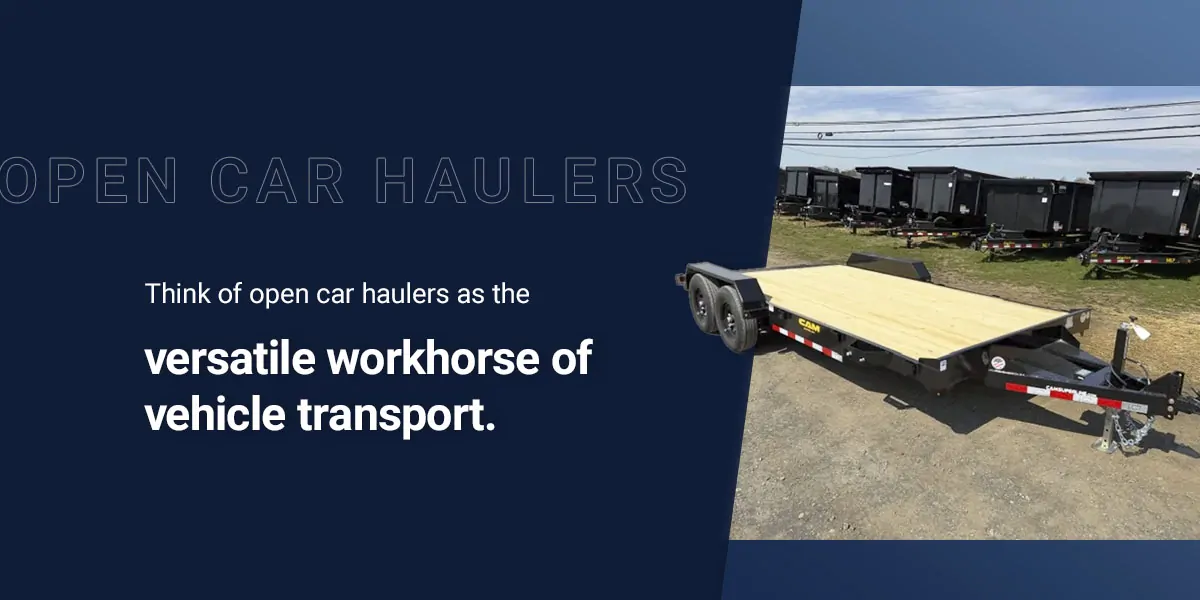
Think of open car haulers as the versatile workhorse of vehicle transport. They’re the most popular choice for good reason:
- Lower up-front cost means a less expensive investment
- Lighter weight translates to better fuel economy when towing
- Easier storage takes up less space when not in use
- Simple maintenance means fewer components to worry about
When you’re moving cars locally or transporting vehicles that see regular road use, an open hauler gets the job done efficiently and affordably.
Enclosed Car Haulers
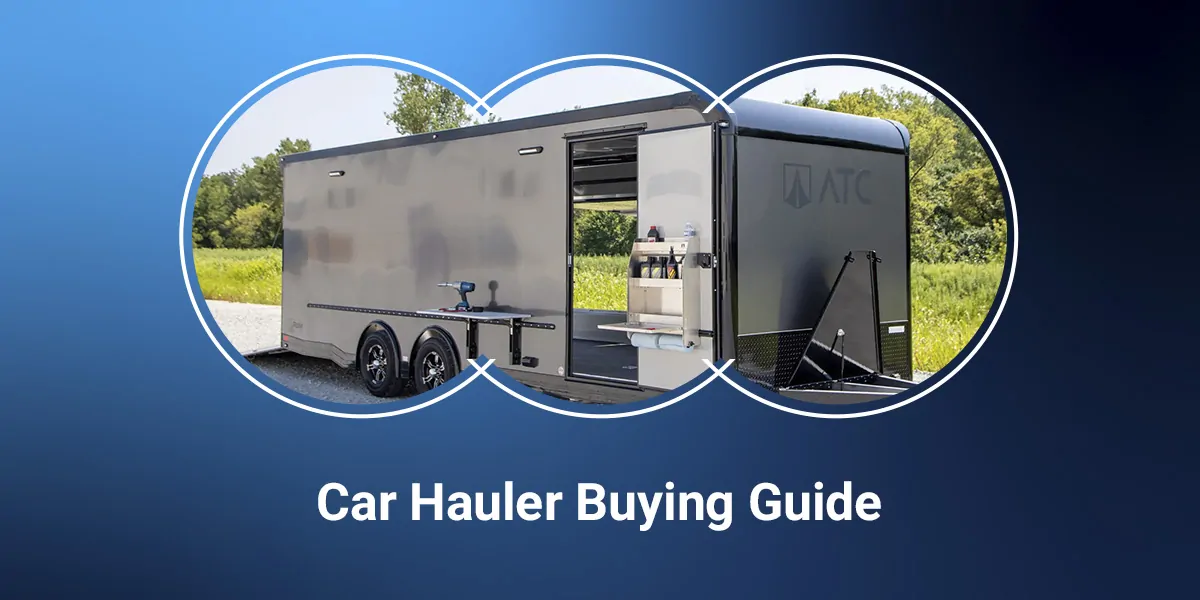
For total protection, enclosed car haulers shield your vehicle from weather, road debris and prying eyes. This added security makes enclosed trailers the go-to choice for high-value vehicles, long-distance hauling and professional transporters who want to deliver pristine results.
The enclosed design also doubles as mobile storage or a workshop. Many car enthusiasts and dealers use them as on-site workspaces at events. The trade-off is that enclosed trailers cost more, weigh more and require more storage space. But for collectors, race teams and professionals, the added protection is worth every penny.
Once you’ve selected your trailer type, you’ll need to understand the technical specifications that determine whether a trailer will actually work for your application.
Step 2: Decode the Specs
Specifications impact safety, performance and whether you can use your car hauler safely and legally. Here’s what to consider.
Gross Vehicle Weight Rating
This is the most important number you’ll encounter. Gross Vehicle Weight Rating (GVWR) tells you the maximum weight the trailer can safely carry, including the trailer’s own weight. Account for the weight of your vehicle plus any gear, tools or equipment you’re hauling. Follow these steps:
- Weigh your vehicle: Look up its curb weight or visit a certified scale for an accurate measurement.
- Add cargo weight: Include at least 500 pounds for fuel, tools and equipment.
- Choose appropriate GVWR: Select a trailer that exceeds your total weight by at least 10% to provide a safety buffer.
This margin keeps you legal, safe and within the trailer’s capacity even when you’re fully loaded.
Single vs. Tandem Axles
Understanding what size trailer you need to haul a car also means choosing the right axle configuration. Single-axle and dual-axle trailers are the most common. Single-axle trailers work well for lighter loads and offer easier maneuverability in tight spaces.
But for most car hauling applications, dual- or tandem-axle trailers are the better choice. Dual axles provide more stability on the highway, distribute weight more evenly, reducing tire wear and offer a critical safety margin. If one tire fails, you can still limp to safety on the remaining tires.
Construction Material
The materials used in car hauler construction affect performance and longevity. You’ll choose between steel and aluminum. Steel trailers are strong, durable and typically less expensive up front. They handle heavy use without complaint and are easier to repair at most welding shops.
Aluminum trailers are lighter, which translates to better fuel economy and easier towing with smaller vehicles. Aluminum also resists corrosion, making it ideal when you’re near saltwater or drive in winter conditions. However, aluminum carries a higher initial price and requires specialized welding for repairs.
Ramps and Loading
When evaluating which car hauler best suits your needs, carefully consider the loading systems.
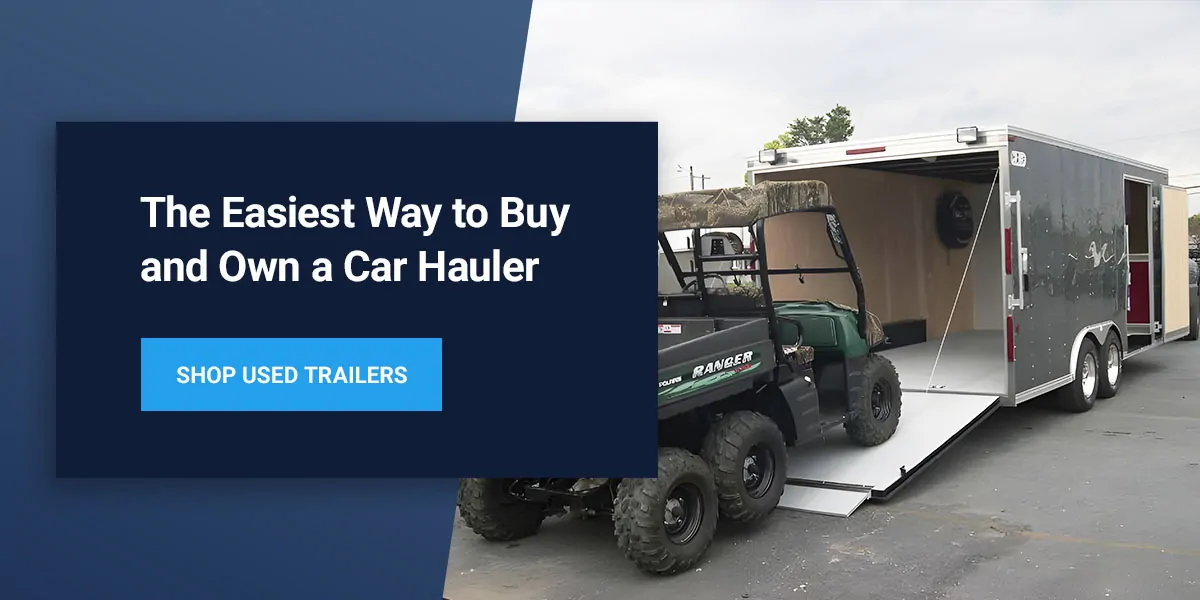
Most car haulers use slide-in ramps that store underneath the deck when not in use. They perform well for most vehicles, but pay attention to ramp angle and weight capacity. For low-clearance sports cars or modified vehicles, consider a tilt trailer. The entire deck tilts to ground level, eliminating steep angles and making loading dramatically easier.
Brakes and Tires
Safety equipment is essential for any car hauler. Trailer brakes are required in most states for trailers weighing over a certain limit. Electric brakes are the most common and work seamlessly with your tow vehicle’s braking system.
Also, note that trailer tires marked with “ST” for Special Trailer are engineered differently from car tires. They’re designed to handle the unique stresses of towing, so always replace them with proper ST-rated tires.
Now that you understand the specs, here are the final considerations that affect your purchase decision.
Step 3: Important Buying Considerations
You’ve narrowed down the type and specs. Before you buy, three final factors will impact your decision and long-term satisfaction.
New vs. Used
New trailers come with advantages that provide peace of mind:
- Manufacturer’s warranty: New trailers include protection against manufacturing defects and structural issues, typically covering major components for at least one year.
- Latest safety features: You’ll benefit from the latest technology and updated compliance standards, including modern lighting systems and improved braking systems.
- Complete history: As the first owner, you know exactly how the trailer has been used and maintained.
Used trailers can offer excellent value, especially on a budget. The key is a thorough inspection. Check for:
- Frame damage: Look for cracks, bends or poorly done welds that could compromise safety.
- Rust or corrosion: Examine the frame and suspension components for rust or other corrosion, which can weaken structural integrity over time.
- Worn tires: Check for shallow tread depth, sidewall cracking or uneven wear patterns.
- Functioning brakes: Test all brake components and inspect brake drums or rotors for excessive wear.
Considering selling your current trailer? Trade-ins can make upgrading more affordable.
Safety and Compliance
Look for trailers that meet standards set by the National Association of Trailer Manufacturers (NATM). The NATM compliance decal is your seal of approval. It confirms the trailer meets federal safety standards for lighting, braking and construction. Compliance is about your safety and the safety of others on the road.
Your Tow Vehicle
A trailer is only half the equation. Your tow vehicle must be capable of safely handling the trailer’s GVWR.
Check the owner’s manual for your vehicle’s towing capacity. This is the maximum weight it can safely tow. Don’t forget to factor in the weight of passengers and cargo inside the tow vehicle itself. New to towing? Familiarize yourself with proper towing techniques before you hit the road.
The Easiest Way to Buy and Own a Car Hauler
This guide has shown you how to make an informed decision, but choosing the right trailer is just the beginning. You may also want to know about financing, customization, ongoing maintenance and repairs. That’s where All Pro Trailer Superstore makes ownership easy. Our knowledgeable team helps you find the perfect trailer from our extensive inventory, then supports you long after the sale.
Need flexible financing options? We’ve got you covered. Want custom features and designs to fit your exact needs? We can design it. From professional service and repairs to expert advice, we’re your one-stop shop for everything trailers.
Don’t navigate this decision alone. Contact our award-winning team — we can help you take the guesswork out of buying and owning a car hauler.
